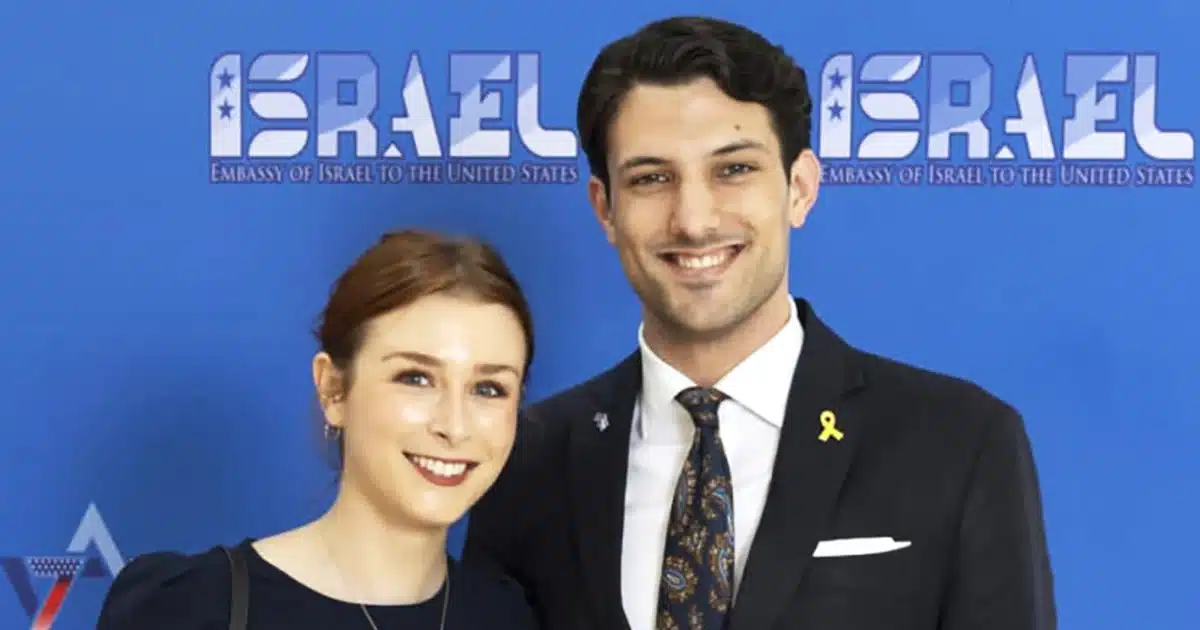
Sarah and Yaron
Dear beloved fellow members of Harvard’s Jewish community,
I hope my message finds you, and those you love, well – on this dark day for world Jewry, and an ominous one for Harvard as well.
I had been planning on writing to you all about commencement and leadership, and some of the complexities around those things, or perhaps about visas and the Jewish community’s responsibility to insist on process and the rule of law even and especially when our interests are involved. There is much that needs to be said on each of those – and today, they must wait.
When I speak with people whose lives have been touched by Judaism’s spiritual resources, the most common expression of gratitude I hear is for the wisdom of Jewish practices surrounding death and mourning. At the heart of that wisdom is the concept of k’vod ha-met, which can be partially translated as “the honor due the dead.” This translation is only partial because the “honor” of k’vod ha-met is not honor in the sense that we use the term in contemporary English, but the honor of an honor society: one of duels and ranks, like the mediterranean honor society of Rome in which our Rabbis of blessed memory lived, taught, and grieved.
Honor in this sense is fundamentally about hierarchy: who takes precedence over whom. Who eats first at a meal, who exits first from a carriage, and who takes priority in a crowded schedule when not everything can get done. Or – who should be the topic of an email to a community buffeted by multiple cross-winds. K’vod ha-met is the radical insistence that the dignity of the dead – who can do nothing by or for themselves, much less for any of us – takes precedence over the concerns and affairs of our lives, no matter how pressing or weighty. So it is in living this value that I am dedicating this message to focusing our community’s grieving hearts and worried minds on the murder of Sarah Milgirm and Yaron Lischinsky, may their memories always be for a blessing.
There are no words for the loss of young people like Yaron and Sarah at the hands of those who would cut down our entire community. And here, even and specifically for this moment of speechlessness – our tradition provides us with the words our hearts would utter if only we could muster them (Lamentations 2:13):
What could I say about you
What could I compare you to
Daughter of Jerusalem?To what could I liken you to comfort you
Young woman of Zion?For your ruin is as great as the ocean
Who could heal you?
In three searingly aching questions, the poet (perhaps Jeremiah) gazes upon a scene of wanton destruction – Jerusalem in his day, a street in Northwest DC spattered with drying innocent blood and littered with twenty-one bullet casings in ours – and confronts the chasm between any comprehensible reality and our own. How can, and how will, we live in a world where a young couple who represents the best of what we hope for our lives, for our children, and for our grandchildren – can be destroyed through the deadly fury of a radicalized, unstable man with a weapon? In the wake of the murder of Yaron and Sarah, the ocean, the Bible’s image for primordial, unbridled chaos, haunts our vision, lurking in the background as we look upon faces of those we love and care for.
My friends were teachers of Yaron and Sarah’s in different context, and described them as the kind of students, friends, and neighbors, we long for – and long for our children to have: principled, kind, hard-working, and in equal parts committed to and able to bring about a world that is less fractured and more peaceful. Our gaze will be forever dimmed by questions words cannot answer: what kind of home would they have built, how would they have led their lives, how many children would they have had? The inadequacy of words and the vastness of the sea are the only images adequate to the impossibility of the one thing we wish we could do: to have saved them, or to bring them back.
Our surge of grief calls us to two reckonings. The first about what it means to be a Jew across the world: part of our educational and spiritual mission at Harvard Hillel is to recognize and cultivate bonds of solidarity that stretch beyond campus, reaching to DC and to every corner of this world. While there is something absolutely vital in the principles of Institutional Voice that Harvard has adopted – they can never fully contain who and what we are: to be a Jew at or of Harvard means to participate in a vast family and community – and to share in that family’s triumphs and, on days like today, its grief.
The second is that we are not the only family, or people, grieving the tragic killing of young people in our community – or fearful for our future. I have been moved – as I imagine you are as well – by the expressions of sympathy that have come from many corners of the university. Chaplains, pastors, and faculty members have reached out across lines of religion, station, and politics to express their concern and their solidarity. And to fully thank them, we must reciprocate: opening our hearts, rather than shuttering them, to the fear and loss of other communities who have lost, and may well continue to lose, their own youth.
In the movement between these two – a profound and proud living-within our own community, and the insistence that our care for our community makes us more, and not less, alive to the suffering of others – lies the tension and the drama of Jewish ethics and Jewish participation in a pluralistic society.
Sarah and Yaron – may your memories be always for a blessing, may your killer meet with justice, and may we merit that your deaths not be in vain – by rededicating ourselves to the causes you lived and died for: a peaceful and secure Israel, a thriving Jewish community, and, more than anything, a world where young people of your promise and principle will always and everywhere be granted the freedom and the means to pursue their dreams in safety and dignity.
Shabbat shalom,

Rabbi Jason Rubenstein
Executive Director